Reviewed and updated October 8, 2026.
About this page: This URL previously introduced Multiplier-X1 Fast and Thorough. ALLTIPLY’s current model page presents Multiplier XSIX Fast and Deep. Use that page as the starting point for current model evaluation.
Choose a model against the work it must do
Define the task, the information the system may use, the actions it may take and the errors a reviewer would reject. Agree on an evaluation set before comparing models. Test the full system, including retrieval, tools and human review, under the conditions in which it will run.
Evidence to request
- The exact model. Request the checkpoint, version, model card, license and any tuning or quantization used in the proposed deployment.
- The evaluation record. Ask for representative tasks, sample size, scoring rubric, baseline, failure examples and reviewer method. Keep a held-out set for the acceptance decision.
- The deployment conditions. Record hardware, memory, precision, context and output length, concurrency, retrieval settings and tool calls. These conditions should accompany any performance result.
- The timing and reliability measures. Distinguish time to first token from complete-answer time. Request the distribution of timings, error rate and test period, together with the workload and service boundary.
- The data and control boundary. Identify where prompts, documents, outputs, logs and backups reside; who can access them; and which external services are involved. Request applicable control evidence with the covered entity, service and period.
- The operating agreement. Ask who monitors the system, handles incidents, approves changes and supports a handoff. Confirm support commitments in the proposed agreement.
- The full cost model. Include infrastructure, inference, data preparation, integration, evaluation, human review and ongoing operation. Label assumptions and test sensitivity to usage and workload.
Keep an evaluation record
Use one row per representative task: expected result, source documents, observed output, rejected errors, reviewer decision and timing conditions. Keep the exact system configuration with that record. A model name or demonstration alone does not establish suitability for your workload.
Acceptance before rollout
Agree on which tasks must pass, which errors require human escalation and what evidence permits a release. Keep the evaluation assets and configuration with the release record so the same checks can be repeated after a model or system change.
Related implementation evidence
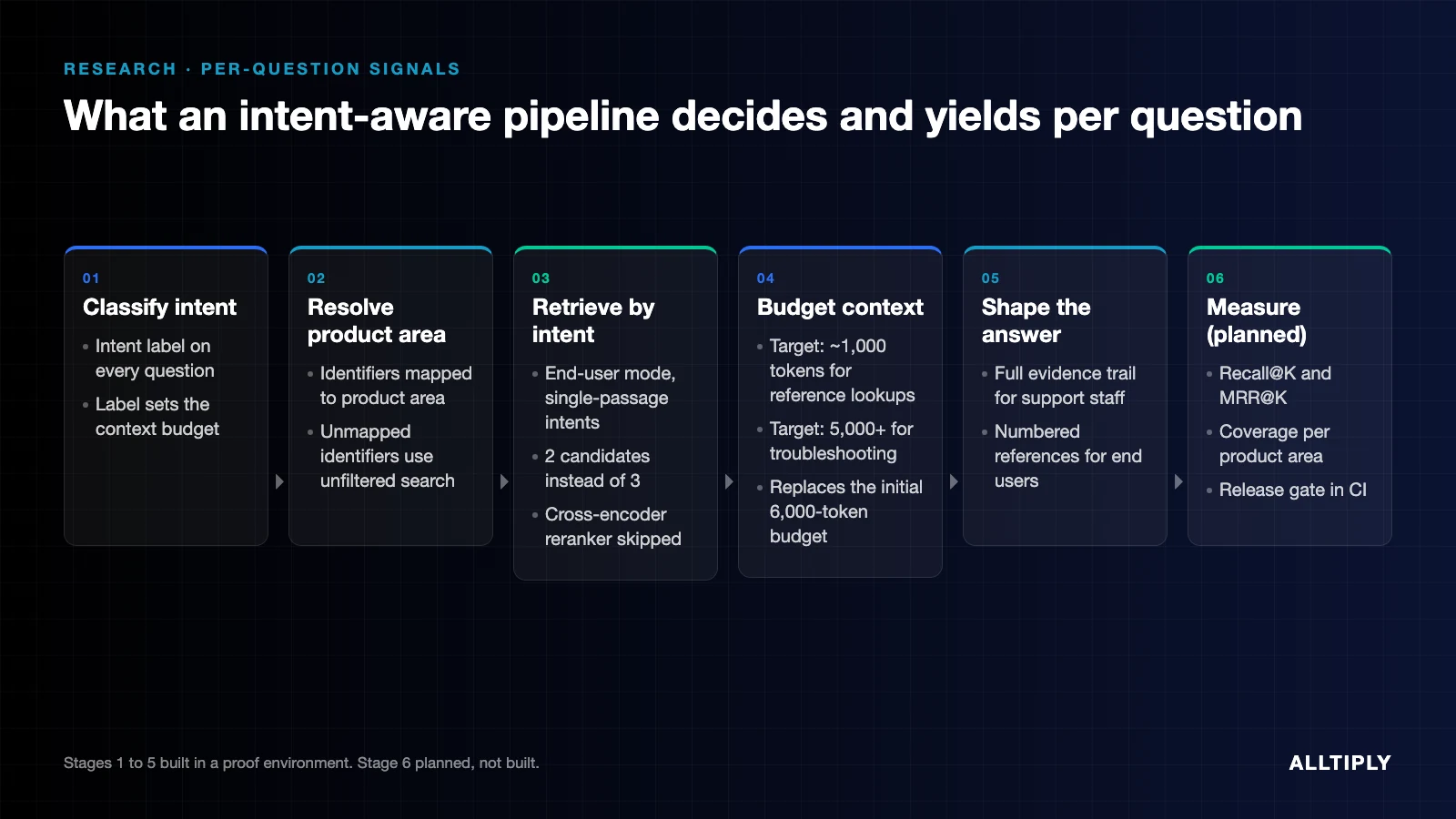
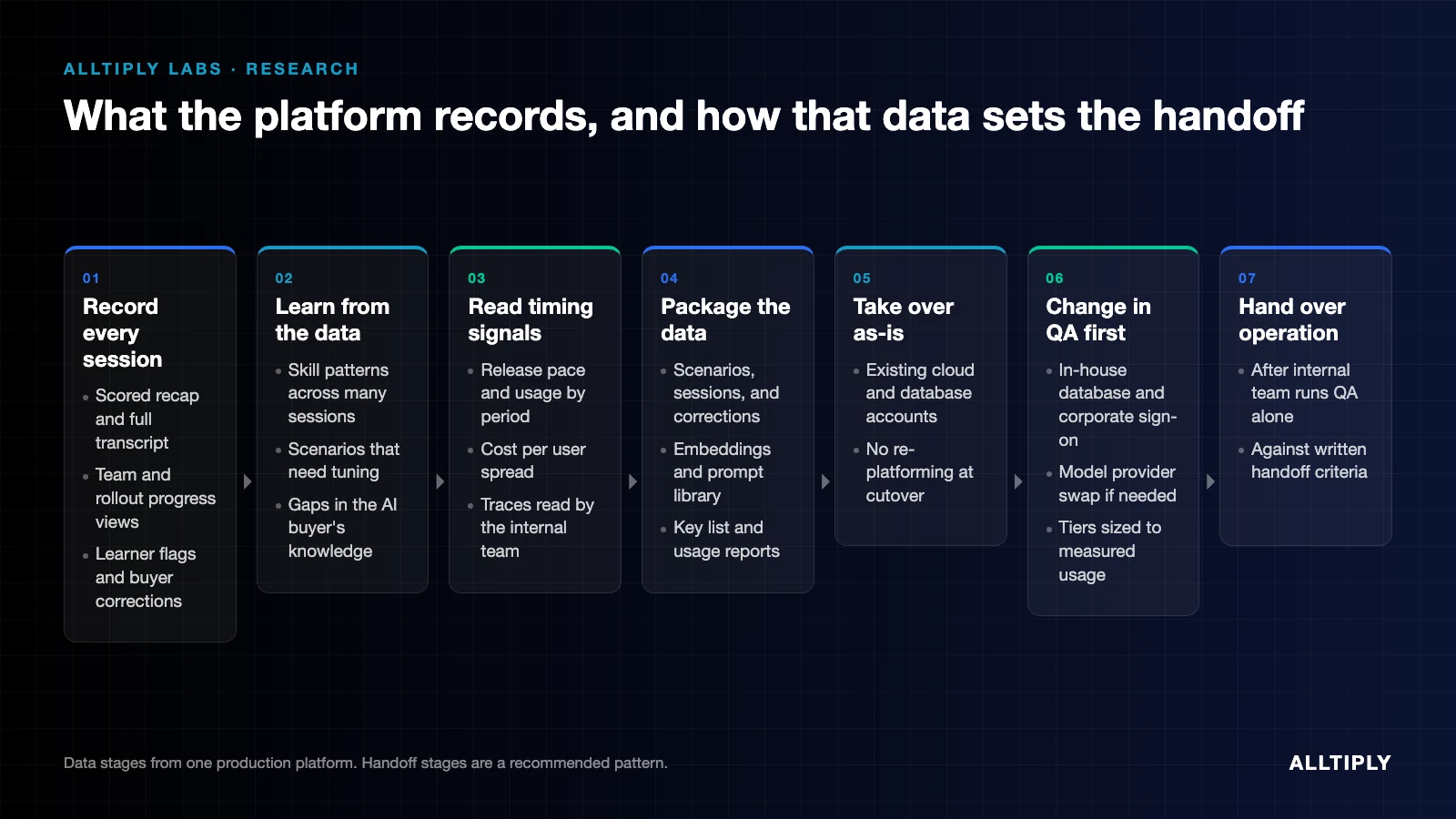
The intent-aware retrieval field report describes a demonstration proof and its remaining measurement work. The voice-assessment grading field report explains why scoring rules need review. The production voice-platform operating report separates observed operating records from recommended handoff practice.
For delivery scope, see custom AI development and private AI infrastructure and deployment. Request a project review to discuss the system you need to evaluate.